
Are Bamboo Socks Warm Enough for Indian Winters?
Are bamboo socks warm in winter? Learn how bamboo socks handle Indian winters, sweaty closed shoes, foot odour and cracked heels, and how to wash them.
Are Bamboo Socks Warm Enough for Indian Winters?
Yes, for most of India. Bamboo socks keep feet comfortably warm in typical Indian winters, where days are mild and mornings are cold. They also do something wool and synthetic socks often don't: they pull sweat away from your skin, which keeps feet drier and fresher in closed shoes. For very cold places like the hills, wear them as a soft inner layer under a thicker sock.
What Indian winters actually feel like
Indian winters are not like European winters. For most of the country, mornings and nights are cold, often between 5°C and 15°C in North India and milder in the South and West. Afternoons are often pleasant, sometimes warm enough to sweat. And we spend long hours in closed shoes, at the office, at school, while travelling and on evening walks. So your socks have two jobs: keep feet warm in the cold hours, and stay comfortable when your feet warm up and sweat. That is exactly where bamboo socks do well.
Are bamboo socks warm? How bamboo fabric works
Bamboo socks are made from fibre that comes from the bamboo plant. The fabric is soft, smooth and breathable, and it handles temperature in a balanced way. It holds a layer of warm air close to your skin, so your feet don't feel the cold as quickly. It moves moisture away from the skin, and since wet feet feel colder, dry feet stay warmer. It also breathes, so feet don't overheat when the day warms up. Think of bamboo socks as comfortable across a wide range of temperatures rather than simply hot. They won't overheat your feet in a heated office, and they won't leave you cold on a December morning walk in most Indian cities. If you live in Delhi, Lucknow, Jaipur, Pune, Bengaluru, Kolkata or similar cities, bamboo socks are a great everyday winter choice. If you are heading to Manali, Shimla, Ladakh or Kashmir, wear bamboo socks as a soft inner layer with woollen socks on top.
Winter problem 1: Sweat in closed shoes
Many people assume feet don't sweat in winter, but they do. Closed shoes, long office hours and heaters all trap heat. Cotton socks soak up that sweat and stay damp, which leaves feet feeling cold and clammy by evening. Bamboo socks help by pulling moisture away from your skin, letting air move through the fabric and drying faster than regular cotton socks. The result is drier, more comfortable feet from morning to night.
Winter problem 2: Foot odour
Odour builds up when sweat stays trapped in socks and shoes. Because bamboo socks manage moisture well, they help reduce the damp conditions that lead to smell, which is why many people find bamboo socks stay fresher through a long day than ordinary socks. For fresher feet in winter, wear a fresh pair every day, let your shoes air out overnight, rotate between two pairs of shoes if you can, and dry your feet well after bathing, including between the toes.
Winter problem 3: Cracked heels
Cold, dry air pulls moisture from your skin, and heels are often the first place it shows. Socks can be part of a simple night-time routine. Wash and gently dry your feet, apply a thick moisturiser or foot cream to your heels, then put on a pair of soft bamboo socks and sleep in them so the cream stays on your skin instead of your bedsheet. Bamboo fabric feels smooth and gentle on dry skin, which makes it comfortable to wear overnight. If your cracks are deep, painful or bleeding, or if you have diabetes, see a doctor.
Crew or ankle socks for winter?
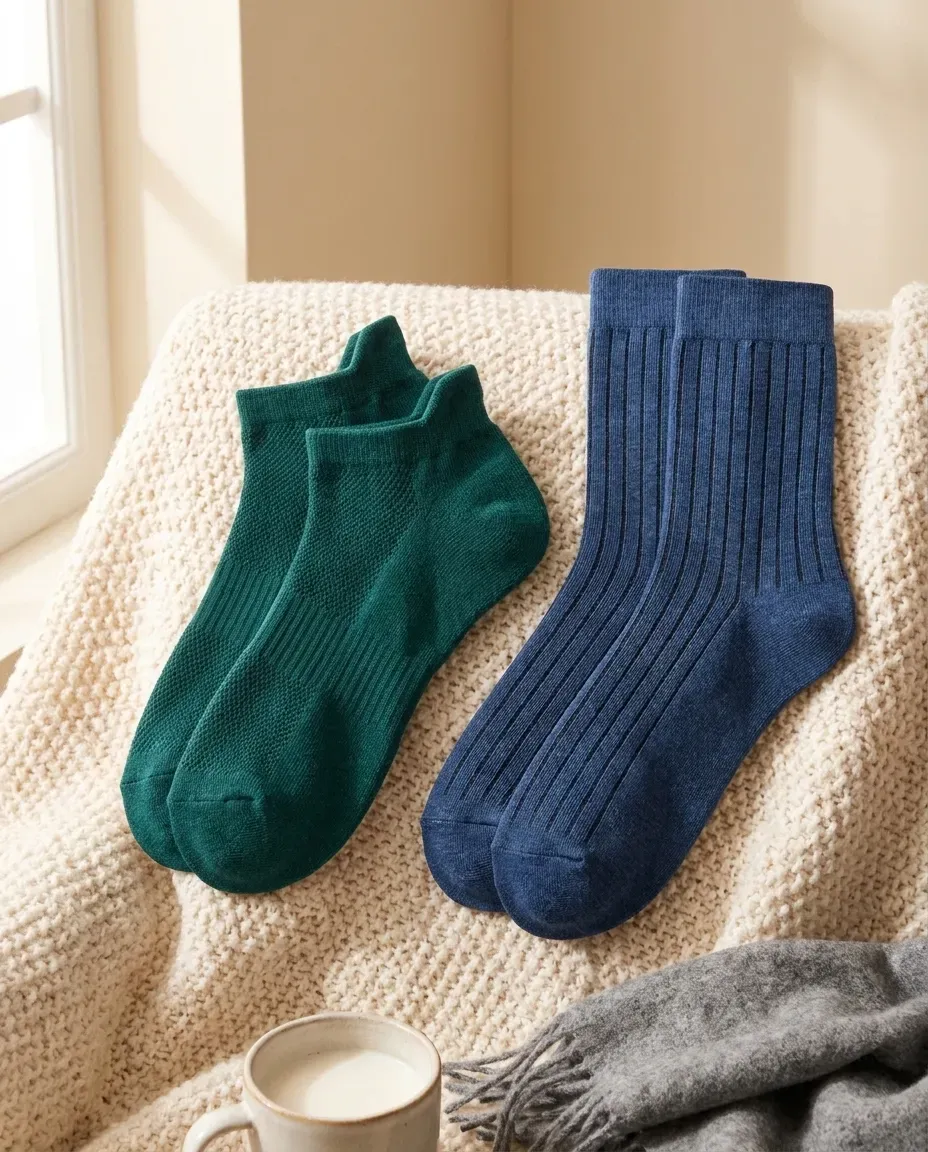
Bamboo crew socks cover the ankle and lower calf, so they keep more of your leg warm. They are the better choice for cold mornings, walks, travel and formal shoes in winter. Bamboo ankle socks are great for sneakers, the gym, warmer afternoons and indoor wear. Many people keep both: crew socks for cold days and ankle socks for everything else.
How to wash bamboo socks so they last
Bamboo fabric is soft, so a little care keeps your socks comfortable for longer. Turn them inside out before washing. Use cold or lukewarm water rather than hot, and choose a gentle cycle or wash by hand. Use a mild detergent and skip bleach and fabric softener, since softener can reduce breathability. Air-dry them in the shade and avoid high-heat tumble drying and strong direct sunlight. Don't iron them, and wash dark colours separately for the first few washes. Clothes dry slowly in winter, so hang socks in a well-aired spot and make sure they are fully dry before you wear them, because damp socks feel cold and can start to smell.
Key takeaways
Bamboo socks are warm enough for most Indian winters, where mornings are cold and afternoons are mild. They keep feet warm and dry by holding warm air close and moving sweat away. They help with sweat and odour in closed shoes during long winter days. Worn overnight over moisturiser, they are a gentle part of a cracked heels routine. For very cold hill regions, layer them under woollen socks. Gentle washing and shade drying keep them soft for longer.
Keep your feet comfortable all winter
Warm, dry and fresh is what your feet need in an Indian winter, and bamboo socks deliver all three. Pick Bamboostan Bamboo Crew Socks for cold mornings and walks, and Bamboo Ankle Socks for everyday wear. You can mix colours and build your own bundle for soft, breathable comfort every winter day.
This story is about Bamboo Crew Socks – Build Your Own Bundle. See sizing, specs and reviews on the product page.
