

Make it a set
- 🚚 Free shipping over ₹299
- ↩️ Easy 10-day returns
- 🌿 Real materials, honestly named
- 💸 Cash on Delivery
“I just bought it . not tried hard yet but looks good quality and will be very usefulfor all muscular pain relief”
— H D Arun Kumar✓ Verified
“Loved it, so relaxing and it helps to give relaxation to muscles ✨”
— Harleen Kaur✓ Verified
Specifications
Product details
Cork Muscle Roller
A dense cork roller for releasing tight muscles after a workout or a long day at the desk.
Rest a muscle on top, use your bodyweight, and roll slowly until you find a tight spot. Cork holds firm under full bodyweight where foam compresses and softens over time, grips without sticking, and stays cool. Useful on calves, quads, IT bands, and the upper back. 30 cm long, 8 cm diameter.
Solid cork, no foam core or coating, made in India. Wipe with a damp cloth; cork is naturally moisture-resistant.
Three things make it work.
Real, dense cork
Solid cork through and through -- no foam core, no plastic shell. Holds firm under full bodyweight; doesn't compress and lose its shape over time the way foam does.
Cool, naturally clean
Cork is naturally moisture-resistant and antimicrobial. It doesn't absorb sweat or odour, stays cool to the touch, and grips without sticking. Wipe clean with a damp cloth.
Built to outlast foam
One cork roller outlasts three foam ones. Foam compresses and degrades within months; cork keeps its surface and density for years of daily use.
Five minutes changes the body.
After a workout
Calves, quads, IT bands, hamstrings. Roll slow -- about an inch a second. Pause 20-30 seconds on the tight spots. Less stiffness tomorrow.
Desk-day relief
The upper back, shoulders, and neck collect tension across an afternoon at the laptop. The roller resets it in a few minutes.
Before the workout
Wake up the muscles before a lift, a run, or a yoga class. Cork warms the tissue and primes range of motion -- without a static-stretch routine.
Yoga & mobility
Roll the glutes and hamstrings before practice. Forward folds reach further; hip openers feel honest; the routine starts where the body actually is.
Where it fits your day
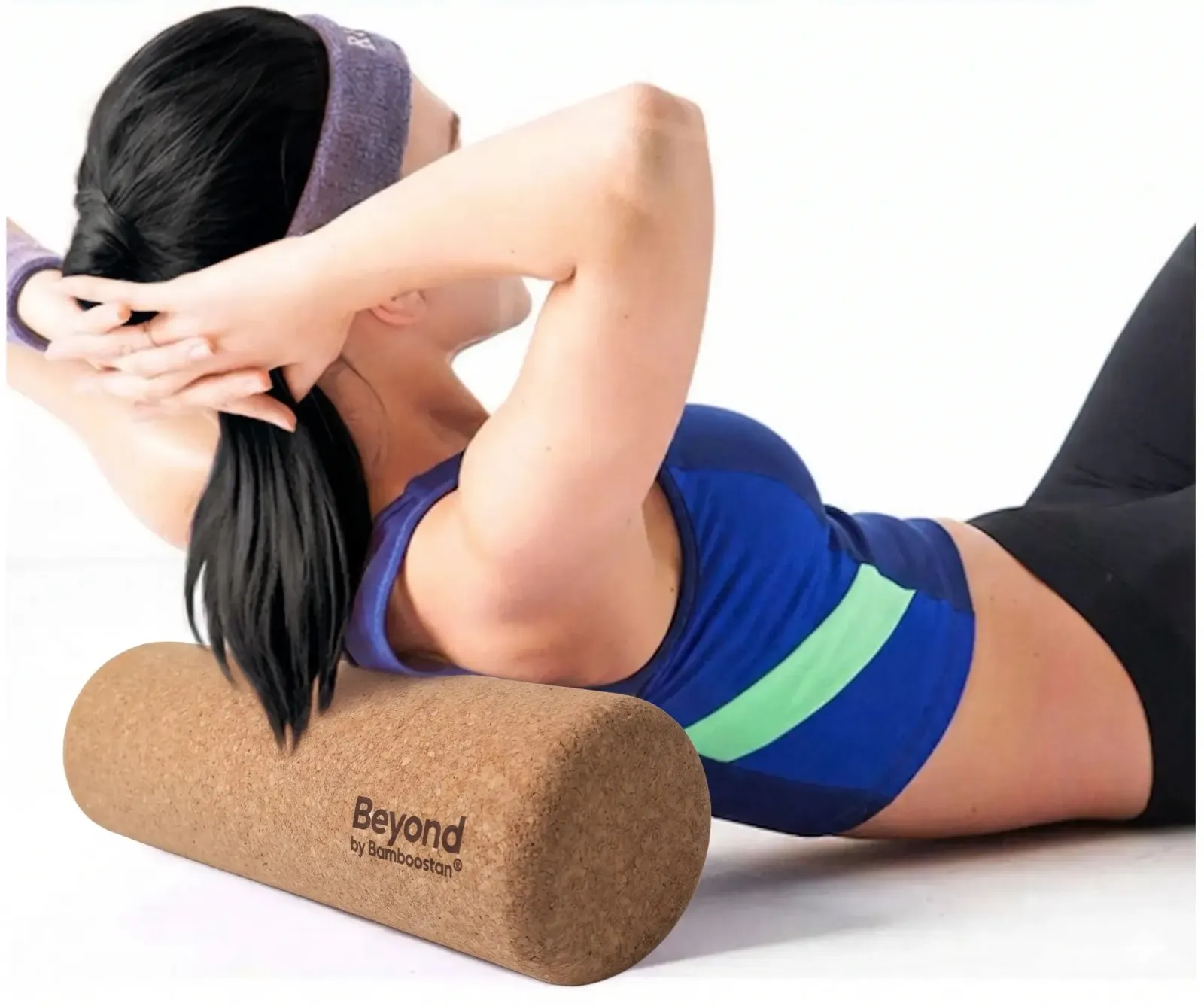
Morning reset
Five minutes on the calves and glutes before the day starts. Stiffness left over from sleep loosens faster than a stretch alone manages.
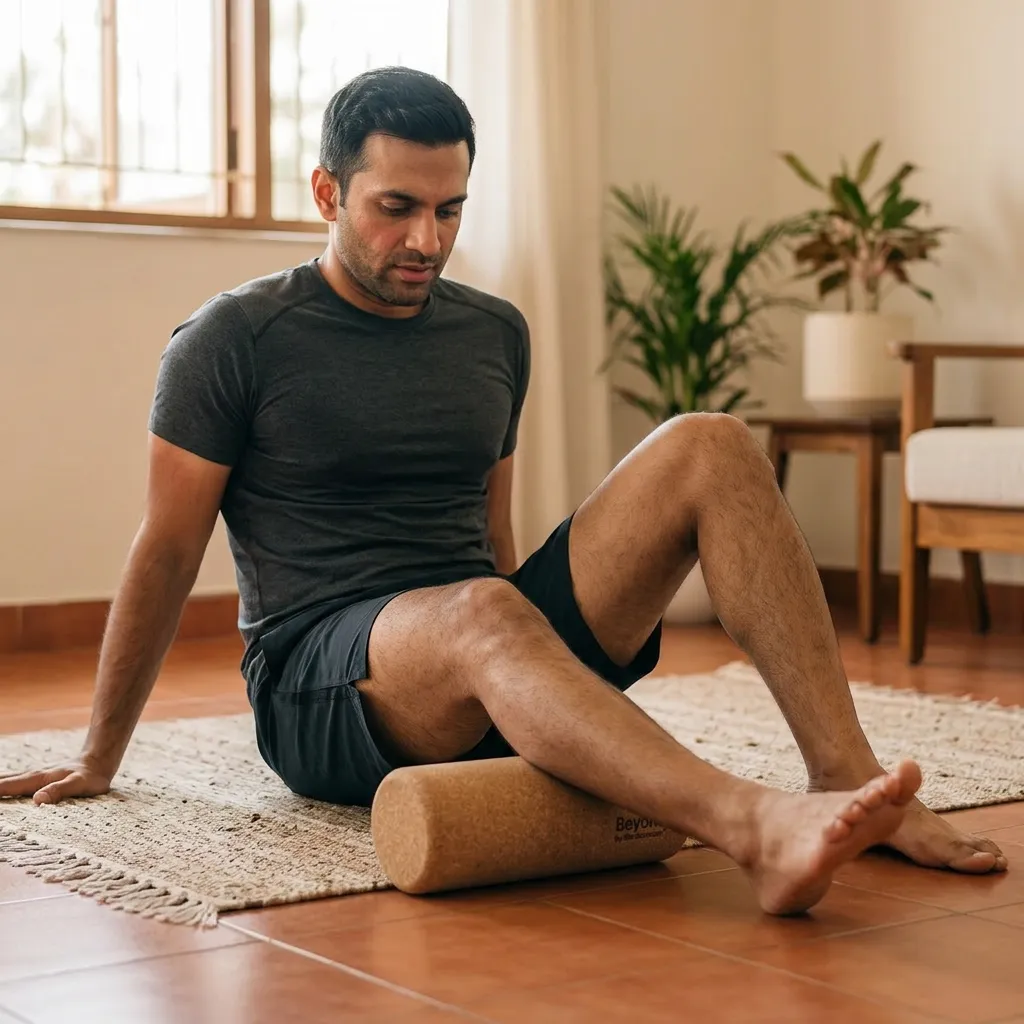
Post-run legs
Calves and IT bands take the pounding of a long run. A slow roll afterwards keeps next-morning soreness from setting in.
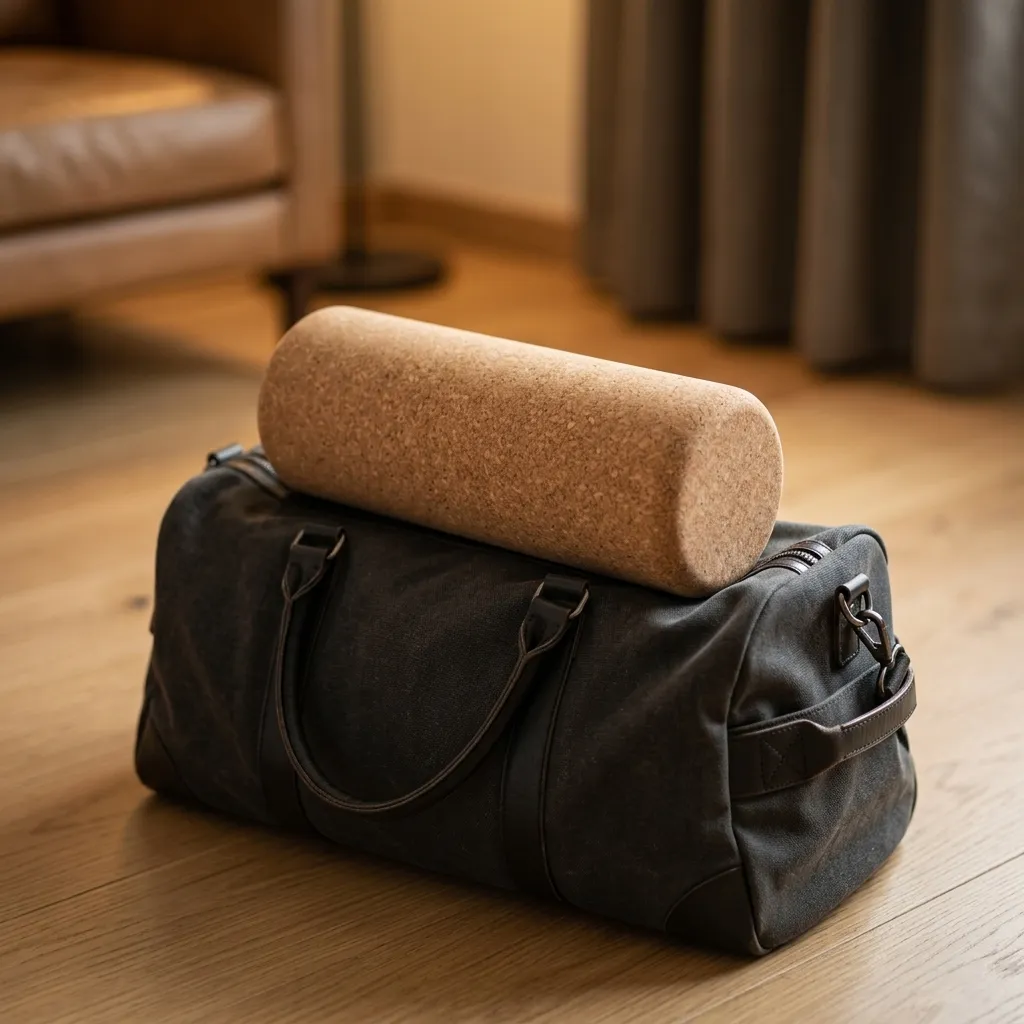
Travel knots
After a long flight or drive, the back and hips seize up. The roller drops into a bag and resets them wherever you land.
Show 2 more ways to use it
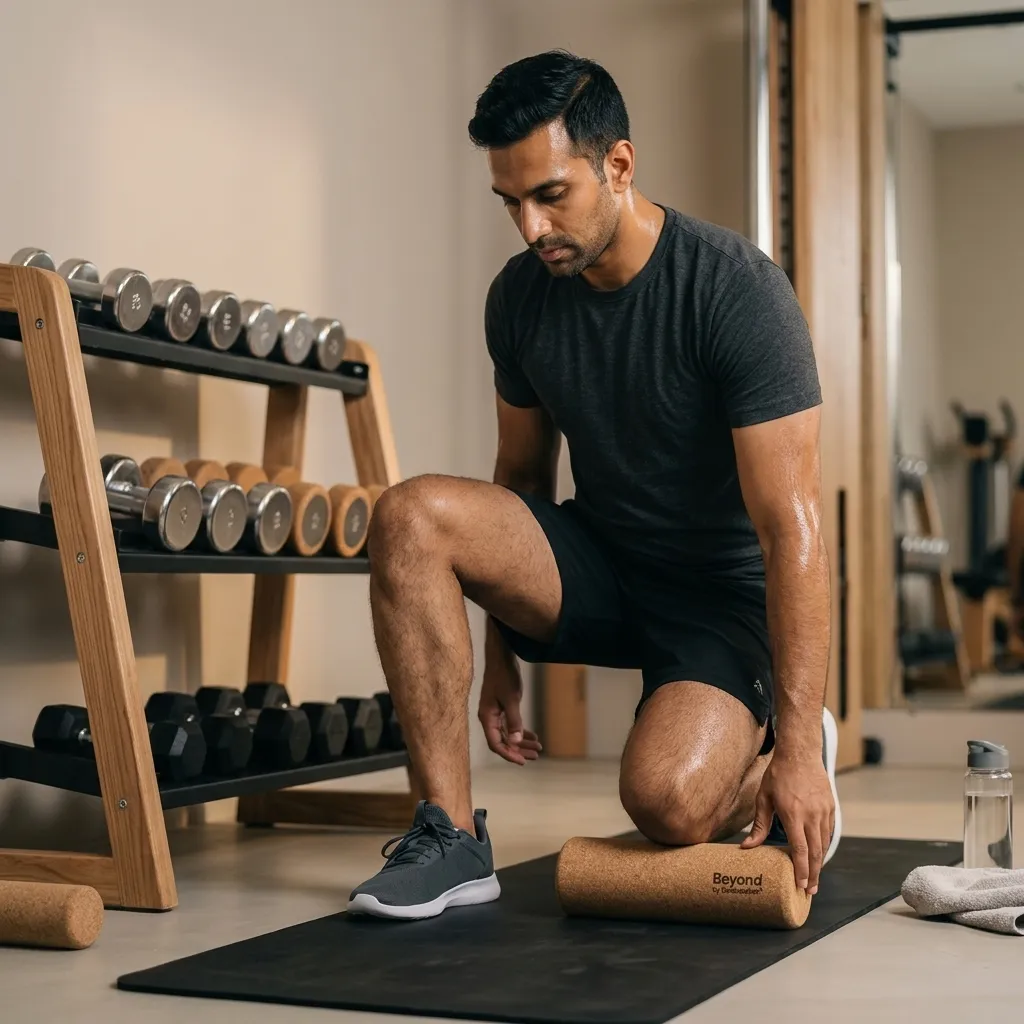
Between sets
Keep it by the rack. Roll a tight muscle between sets to keep blood moving and the next lift feeling cleaner.
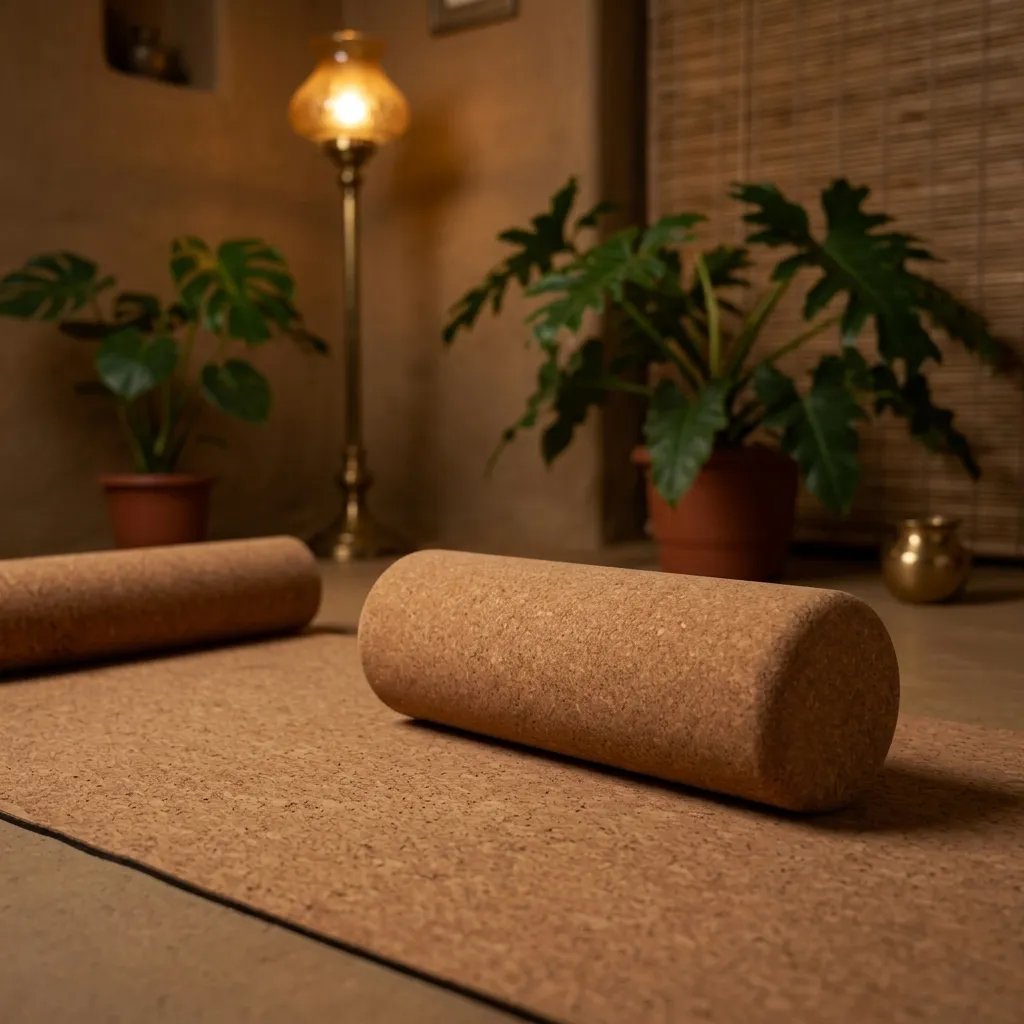
Evening cooldown
Close an evening session rolling the long muscles of the back. Cork stays cool and clean — no foam smell, no sweat soaked in.
A closer look
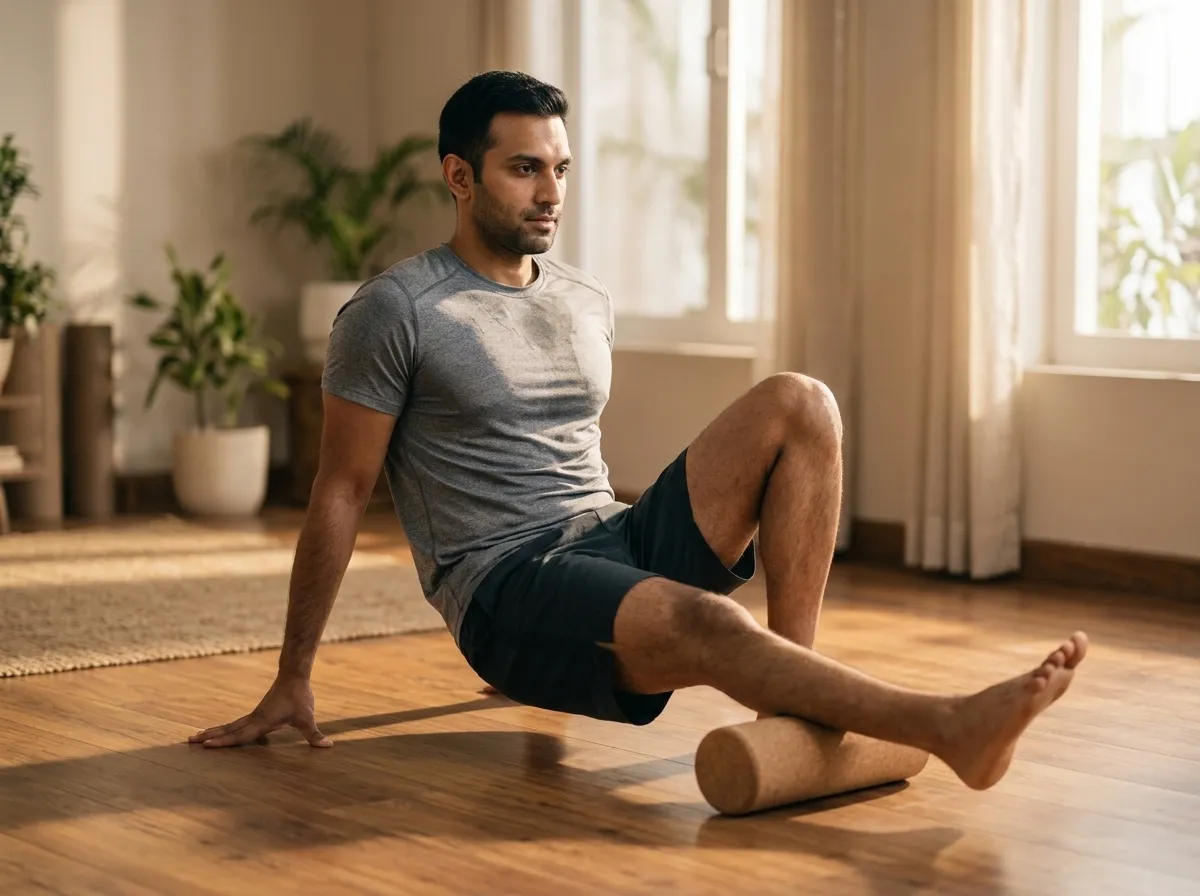
Roll out the session
After legs day or a long run, the calves, quads, IT bands and hamstrings hold the load. Set the roller down, rest a muscle on top, and move about an inch a second. Pause on the tight spots for twenty seconds. Most of tomorrow's stiffness never arrives.
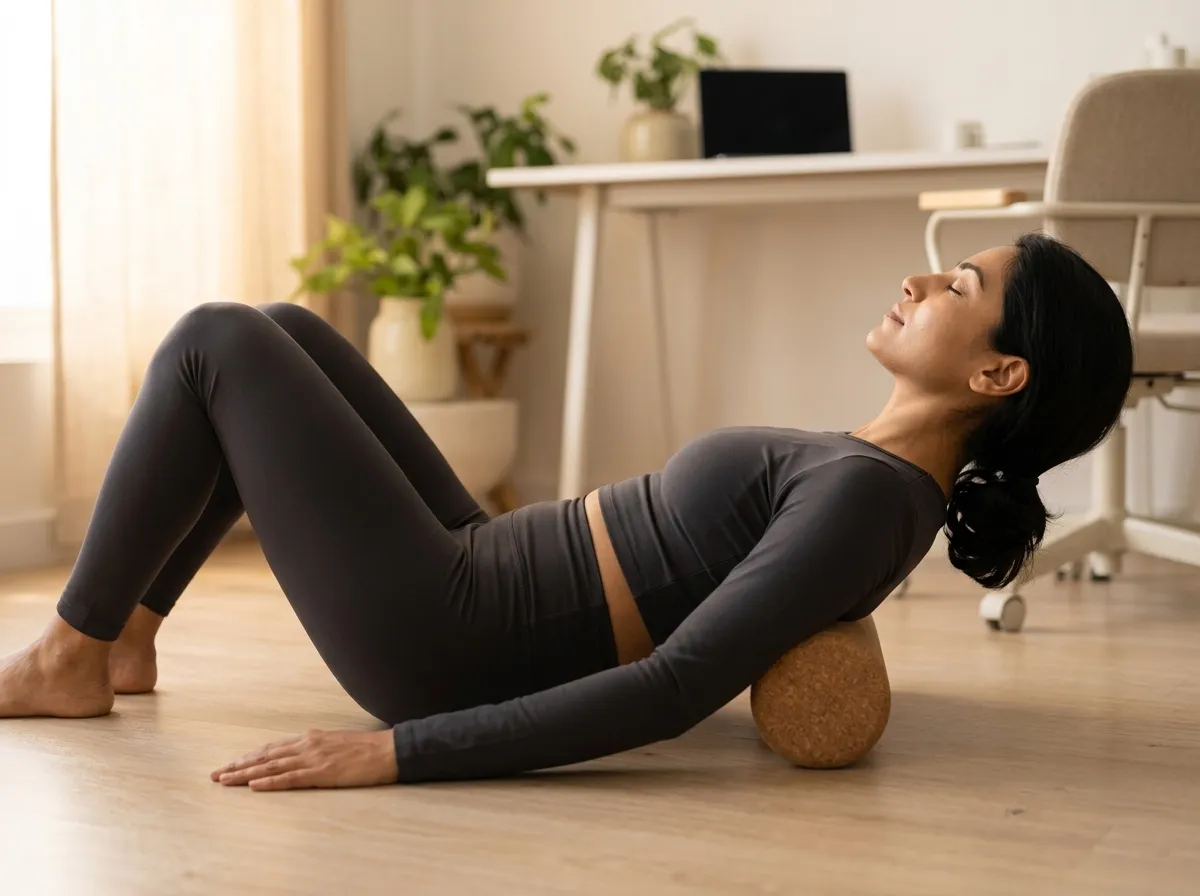
Undo the afternoon
A day bent over a laptop settles into the upper back, shoulders and neck. Lie back over the roller, perpendicular to the spine, and let your bodyweight do the work. A few slow minutes before dinner resets what eight hours at the desk quietly tightened.
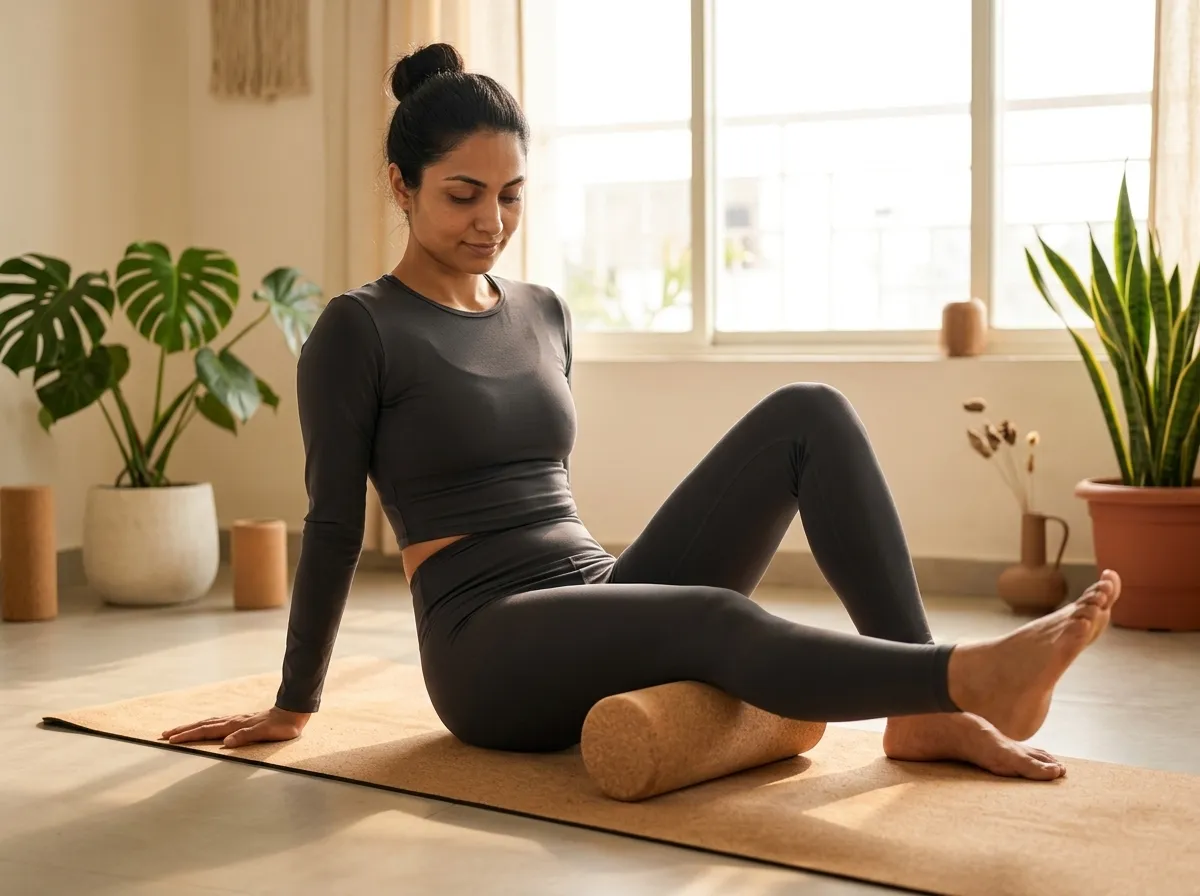
Warm up without stretching
Cork warms the tissue and wakes the muscles before a lift, a run or a yoga class. Roll the glutes and hamstrings for a few minutes and the body shows up ready — forward folds reach further, hips open honestly, range of motion arrives without a static-stretch routine.
Who it’s for
- Lifters chasing faster recovery
- Desk workers with tight backs
- Runners logging weekly miles
- Yoga & mobility practitioners
- Bodies past forty that stiffen overnight
- Anyone done with foam rollers
Frequently bought together
No risk in trying it
- ↩️ Easy 10-day returns
- 🚚 Free shipping over ₹299
- 💸 Cash on Delivery available
- 🌱 Sustainable bamboo, built to last
Questions people ask
What customers say
111 verified reviews
“Perfect post workout recovery”
“I just bought it . not tried hard yet but looks good quality and will be very usefulfor all muscular pain relief”
“Loved it, so relaxing and it helps to give relaxation to muscles ✨”
“Portable , right size and nice finishing.”
“After gym it helps a lot for calves and thighs. Pressure feels perfect.”
“Using after long sitting hours. Good relief and easy to use at home.”
Showing 6 reviews
You may also like


Cork Muscle Roller
Tight muscles, released in five minutes.